Chapter 2 · Japan
Yuzu
Citrus junos. Lemon, mandarin and grapefruit in one rind, with a floral finish no other citrus has.
Yuzu is Chinese by birth and Japanese by career.
The fruit began as a natural cross between the Ichang papeda and a mandarin somewhere in the Yangtze basin of central China, and reached Japan by way of Korea during the Tang dynasty, more than a thousand years ago. An American plant explorer named Frank Meyer collected it in Hubei Province in 1918, at roughly 4,000 feet along the Yangtze, which tells you something about where it likes to live.
The national crop runs to about 25,000 tons a year.
An economy built on aroma
Japan barely eats the fruit. Yuzu is seedy and yields only around eighteen percent juice, with citric acid near four and a half percent, so nobody is drinking it neat. Its entire economy runs on aroma: the zest, the oil in the rind, a few drops of juice seasoning a whole dish. A tree takes about ten years to fruit properly, which is roughly nine years longer than any quarterly plan allows. This is a crop that rewards patience and punishes scale.
Its most famous ritual is not culinary at all. On the winter solstice, Japanese families float whole yuzu in a hot bath. The custom dates to the Edo period and rests on a pun: the winter solstice and a hot spring cure are both pronounced toji. The bath is said to keep colds away for a year. Nobody checks.
Origin as strategy
Demand is not access. Fresh citrus faces strict quarantine rules, and for decades fresh yuzu could not enter the European Union at all. Interest from French chefs meant nothing until a regulatory problem was solved.
So a village solved it. Kitagawa in Kochi Prefecture, population around 1,300, had a yuzu products business and a motive: bumper crops in 2009 and 2010 had collapsed domestic prices. In June 2011 the village and an Osaka trading company staged a tasting in Paris at a two star restaurant for some 140 chefs and critics, yuzu running through every course from cocktails to dessert. The chefs asked how to get fresh fruit. They could not.
What EU market access actually cost
A model orchard was selected, the prefecture’s largest producer, and rebuilt to satisfy EU inspectors. Roughly one third of the pesticides permitted in Japan. No herbicides, so the grass was mown by hand. A ten meter buffer zone around the export block. The farm’s owner called the requirements a hundred times tougher than the domestic market.
In February 2012 Japan’s agriculture ministry and the EU agreed quarantine conditions for Japanese citrus. That October fresh yuzu debuted at SIAL Paris, and buyers claimed the entire exportable harvest in three days. Commercial exports began the following month.
Japan then locked the name down. Regional yuzu such as Kito yuzu are registered under Japan’s geographical indication system, and the EU and Japan mutually protect each other’s registered names under their Economic Partnership Agreement. The United States still bans fresh yuzu imports, permitting only processed juice and oil. Europe has better access to the real fruit than America does.
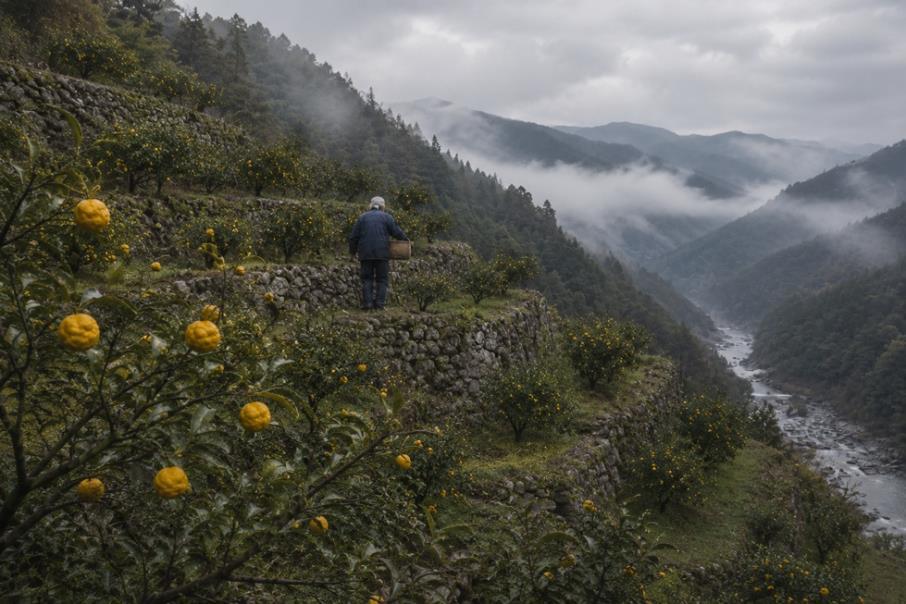
The man who cried over a citrus fruit
The curve, in yen
Note the contrast with ube
10m
Buffer zone required around the model export orchard in Kochi Prefecture
Source: Asia Pours booklet, page 12 (Kochi export figures).
744m
Kochi's yuzu exports by 2022, in yen, up 74.5 percent in a single year
Source: Asia Pours booklet, page 12 (Kochi export figures).
423
Geographical indications mutually protected under the EU-Japan Economic Partnership Agreement, 132 of them Japanese
Source: Asia Pours booklet, page 12 (Kochi export figures).