Asia Pours
A root, a fruit, a leaf. Three ingredients and the Asia behind them.
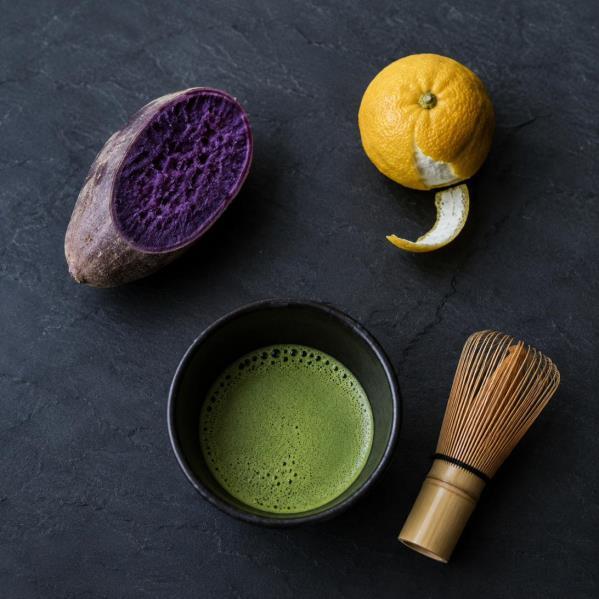
You can try to read your way into a culture on the flight to Singapore. I found the easier way is to order well. A drink is small enough to finish and specific enough to mean something. It names a place, a season, a farm and a trade route, and it does all of that in the time it takes to break the ice with the person across the table. Nobody has ever bonded over a slide deck.
This booklet treats a cocktail as the smallest usable unit of cultural fluency. Each of the three ingredients here carries a story that ends in a supply chain question your counterpart in Manila, Osaka or Kyoto is dealing with right now. The drink is the entry point. The story is what makes it memorable.
Every recipe comes in a version with alcohol, and every chapter closes with one that has none. Half the drinks in this book are zero proof. That is not a concession. Some of the best flavor work in Asian bars right now happens without a drop of spirit.
Three ingredients, three lessons
Ube
Own your name
A purple yam Filipinos have grown for thousands of years, and the world discovered about a decade ago. The boom happened abroad. Most of the value stayed there too.
Read the chapter →Yuzu
Regulate before you sell
An aromatic citrus from Kochi Prefecture that Japan turned into a managed, protected, high margin export. Swiss readers will recognize the playbook immediately, because it is theirs.
Read the chapter →Matcha
Scarcity is structural
Zen tea culture meeting a social media demand shock. Matcha shows what a demand surge does to an artisanal supply base with an aging workforce.
Read the chapter →The short version
| Ube | Yuzu | Matcha | |
|---|---|---|---|
| Origin | Philippines | China, then Japan | China, then Japan |
| Who controls the name | Nobody yet | Japan, by registration | Contested |
| Value capture at origin | Low | High | Under pressure |
| Pressure point | Falling production | Aging growers | Five year replant cycle |
| The lesson | Own your name | Regulate before you sell | Scarcity is structural |
Ube
- Origin
- Philippines
- Who controls the name
- Nobody yet
- Value capture at origin
- Low
- Pressure point
- Falling production
- The lesson
- Own your name
Yuzu
- Origin
- China, then Japan
- Who controls the name
- Japan, by registration
- Value capture at origin
- High
- Pressure point
- Aging growers
- The lesson
- Regulate before you sell
Matcha
- Origin
- China, then Japan
- Who controls the name
- Contested
- Value capture at origin
- Under pressure
- Pressure point
- Five year replant cycle
- The lesson
- Scarcity is structural
Six cocktails, three chapters, one argument about how origin, value and control interact across Asian trade.